
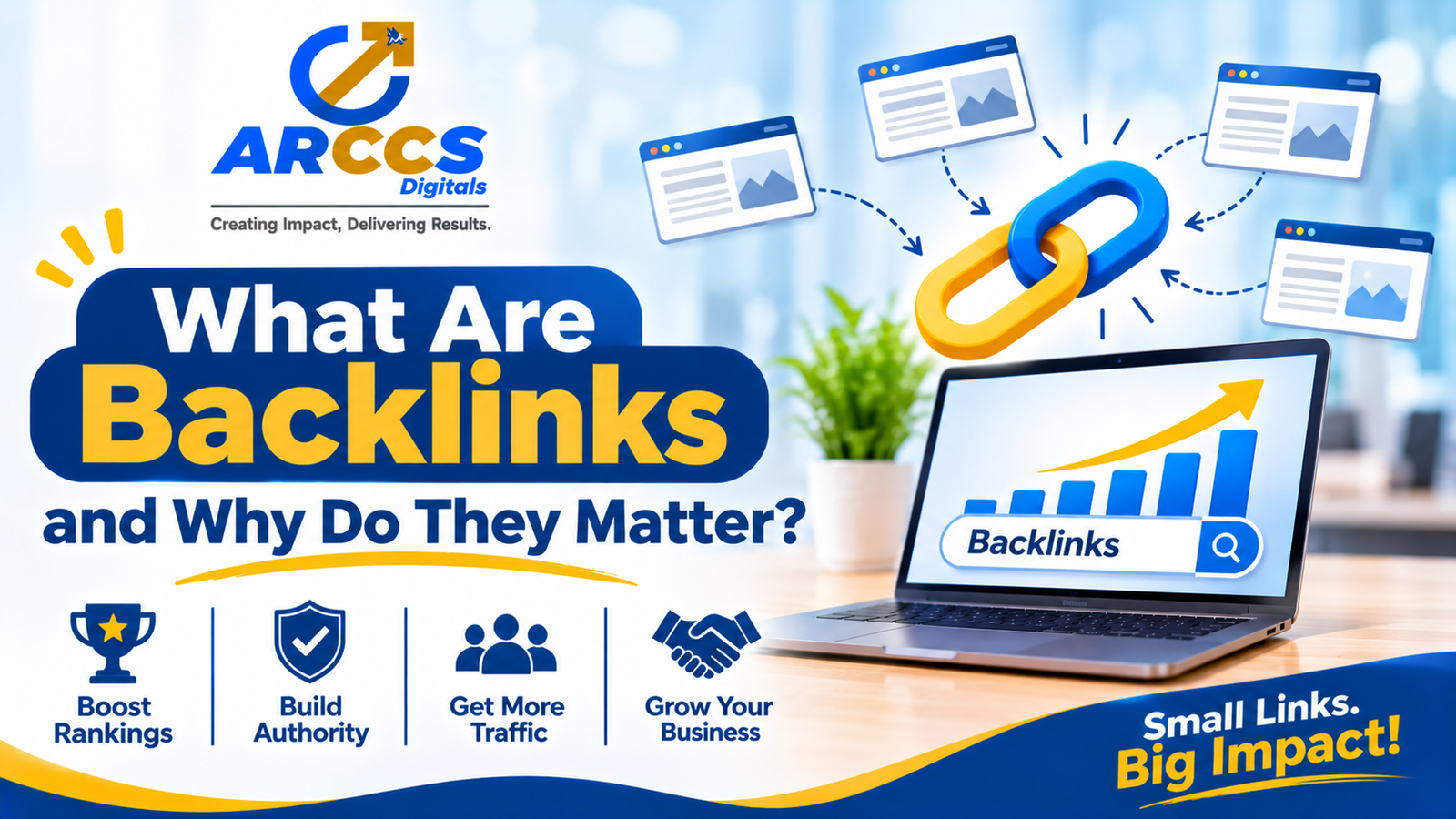
Ask ten people in digital marketing what helps a website rank, and nine of them will say "backlinks." But if you run a business and have never touched SEO, that word probably sounds like jargon. So let's answer the basic question first: what are backlinks?
A backlink is simply a link from another website that points to yours. If a food blogger writes about your sweet shop and adds a clickable link to your website, that's a backlink. You didn't put it there yourself. Someone else chose to send their readers your way.
Think of Backlinks as Recommendations
Imagine you need a good dentist in a new city. You could trust the dentist's own advertisement, or you could trust a friend who says, "Go to Dr. Mehta, she's great." Most of us trust the friend.
Google thinks the same way. When other websites link to you, Google sees it as a recommendation. The more trusted the people recommending you, the more confident Google feels about showing you at the top of the results.
Why Do Backlinks Matter?
They boost your rankings. Backlinks remain one of the strongest ranking signals. Pages with good links usually outrank similar pages with none.
They build authority and trust. A link from a respected website tells both Google and readers that you're credible. This website authority takes time to build, but it protects you for years.
They bring real visitors. A link isn't only for Google. People actually click it. A good mention on a popular blog can send referral traffic straight to your site.
They help Google discover your pages. Google's crawlers move from link to link. A backlink can lead them to your new pages faster, which helps with indexing.
Not All Backlinks Are Equal
This is where many businesses go wrong. They chase numbers, but link quality matters far more than quantity.
A good backlink usually has these qualities:
Relevant. A link from a marketing website to a marketing agency makes sense. A link from an unrelated site doesn't help as much.
Trusted. Links from well-known, reputable sites carry more weight.
Natural. It appears inside genuinely useful content, not stuffed into a random footer.
Descriptive anchor text. The clickable words should read naturally, not repeat the same keywords again and again.
On the other side, links from spammy directories, paid link farms and unrelated foreign websites can hurt you more than help.
Dofollow vs Nofollow: A Quick Note
A dofollow link passes ranking value to your site. A nofollow link tells Google not to count it as a vote. Both have a place. Nofollow links still bring traffic and make your link profile look natural, so don't ignore them.
How to Get Backlinks the Right Way
Create content people want to share, such as useful guides, checklists and local insights.
Write guest posts for relevant websites in your industry.
List your business in trusted directories and keep your details consistent. This supports local SEO too.
Earn brand mentions from news sites, bloggers and partners, and politely ask for a link.
Share your content on LinkedIn, YouTube and Instagram so more people see it, and some may link to it.
Be patient. Good link building is slow and steady. Buying bulk links might look like quick progress, but Google's updates can wipe out those gains and even bring penalties.
Frequently Asked Questions
What are backlinks in SEO?
Backlinks are links from other websites to your website. Search engines treat quality backlinks as votes of trust that help improve rankings.
Are backlinks still important for SEO?
Yes. Backlinks remain a major ranking factor, though Google now cares more about quality and relevance than sheer numbers.
How many backlinks does a website need?
There is no set number. It depends on your competition. A few strong, relevant links often work better than hundreds of weak ones.
What is a bad backlink?
A bad backlink comes from spammy, irrelevant or paid link sites. These can harm your rankings and should be avoided or disavowed.
How can I check my backlinks?
You can use Google Search Console for a free view of who links to you, or paid tools such as Ahrefs and Semrush for deeper reports.